
பெளத்த சமயத்தை பற்றி தமிழில் அறிந்துக் கொள்ள பட்டியலில் (Menu) உள்ள தமிழ் கிளிக் (Click) செய்யவும்
Sacred Scriptures of Buddhism
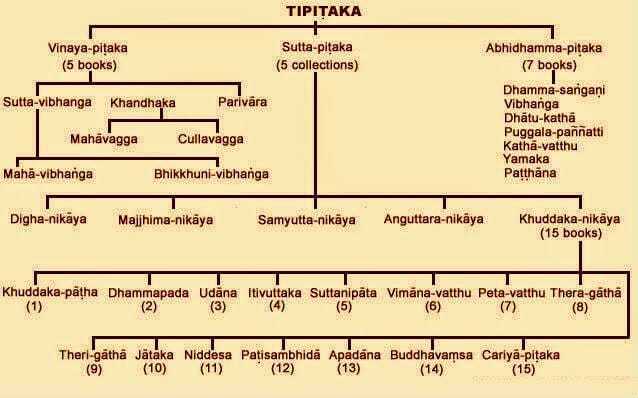
In Buddhism, the Tipiṭaka is the name given to the Buddhist sacred scriptures.
The word “Tipiṭaka” is composed of two Pāli words: Ti, meaning “three,” and Piṭaka, meaning “basket.” Thus, Tipiṭaka literally means “Three Baskets.”
All of the Lord Buddha’s teachings were divided into three parts:
1. Sutta Piṭaka – the discourses of the Lord Buddha for Lay Person, Monks & Nuns.
2. Vinaya Piṭaka – the monastic discipline and rules for Nuns & Monks.
3. Abhidhamma Piṭaka – the higher teachings on Philosophy & Psychology.
It was written on palm leaves in the Pali language around 100 B.C.E. The three parts of the Tipitaka are the Sutta Piṭaka, Vinaya Piṭaka and Abhidhamma Piṭaka. The Tipitaka was composed in the Pali language and takes up more than forty volumes in an English translation, roughly about 20,000 pages. It is the largest sacred book of any of the great world religions.
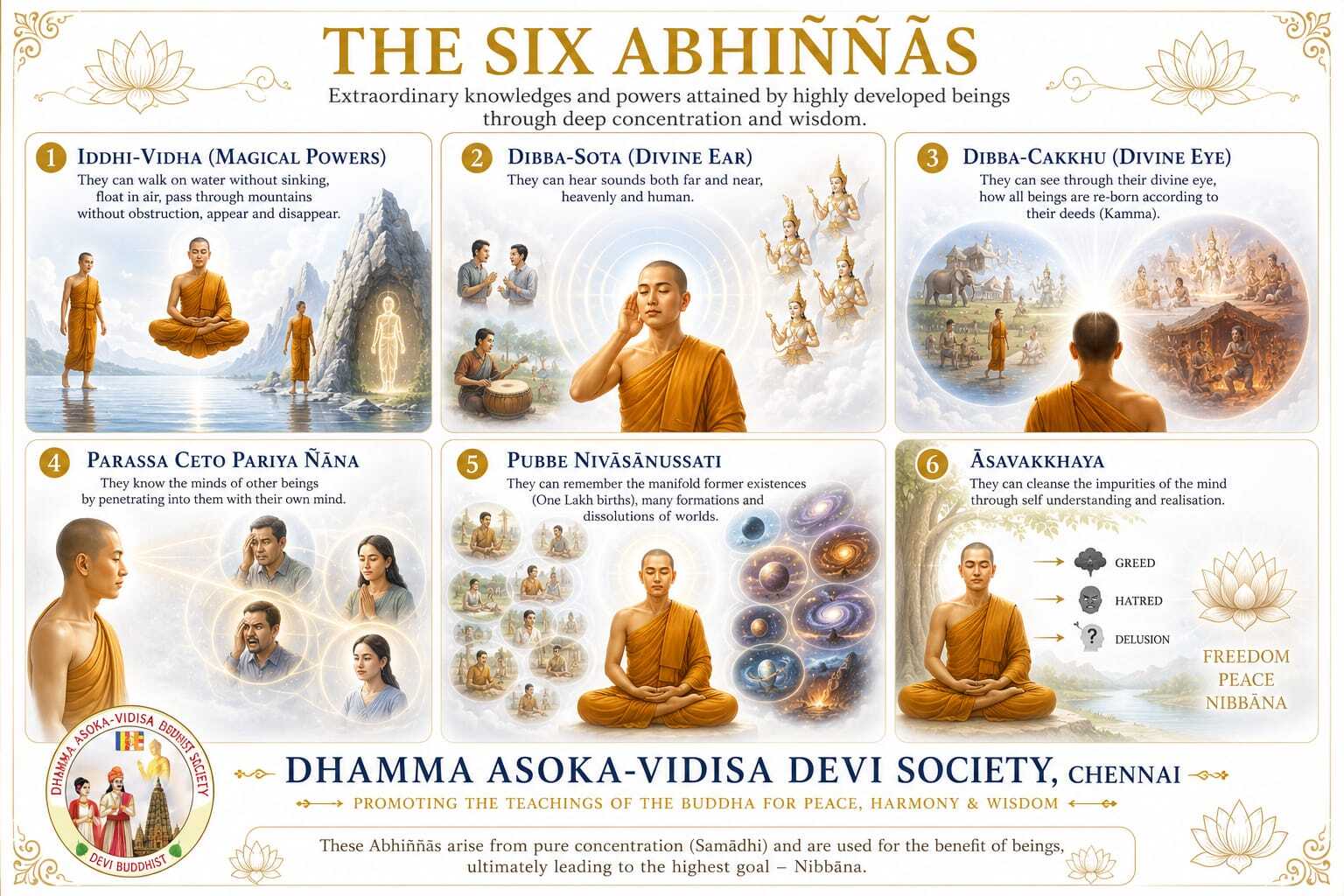
The 6 Supernatural Powers